|
PO Box 41 Hurstbridge |
WINDCHILL ALASKAN MALAMUTES |
Ph: 03 9714 8540 |
|
|
|
|
|
| Weight-Pulling | Backpacking | Sledding |
Click on image for enlargement
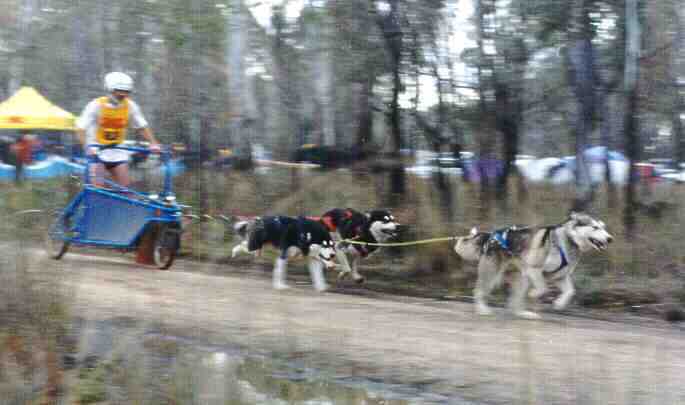
The Malamute is a working dog who will be happy to tackle almost any working activity. Being a sledding breed the Alaskan Malamute has a natural instinct to pull, often at inappropriate times. Rather than finding yourself dragged down the street on your walks, it's a good idea to harness that energy into an activity that the Malamute has a natural ability for. Most Malamutes will take to working activities fairly easily and with much enthusiasm, and working your Malamute can help take some of the frustration out of him or her and make for a better companion.
 Beware!
In most cases it's not a good idea to walk this breed in a walking
harness. Harnesses are designed to give the dog maximum comfort and
maximum pulling power - a combination which means minimum control for the
handler. Put any fit and healthy Malamute into any sort of harness and you
are giving him the message to lean in and pull, not great if you want a nice
relaxing walk. Use harnesses only for working activities when you wish to
encourage the dog to pull, and make sure you have the correct type of harness
for each activity. For information about harnesses go to our Windchill
Dog Gear website.
Beware!
In most cases it's not a good idea to walk this breed in a walking
harness. Harnesses are designed to give the dog maximum comfort and
maximum pulling power - a combination which means minimum control for the
handler. Put any fit and healthy Malamute into any sort of harness and you
are giving him the message to lean in and pull, not great if you want a nice
relaxing walk. Use harnesses only for working activities when you wish to
encourage the dog to pull, and make sure you have the correct type of harness
for each activity. For information about harnesses go to our Windchill
Dog Gear website.
We like to pursue all sorts of activities with our Malamutes once they are mature enough, and a dog that can achieve reasonable success in working activities is obviously a sound specimen of the breed. Showing our dogs is also important as achieving the Australian Champion title is an indication to us that the Malamute is also a reasonable specimen of the breed. It is important to us to breed Malamutes that not only look like Malamutes should, but are sound enough to work like Malamutes should.
Weight pulling is quite a strenuous sport that we only attempt with our Malamutes when they are mature, at around 2 years of age. We would also advise that a Malamute be x-rayed and passed for hip dysplasia before attempting any strenuous activity.
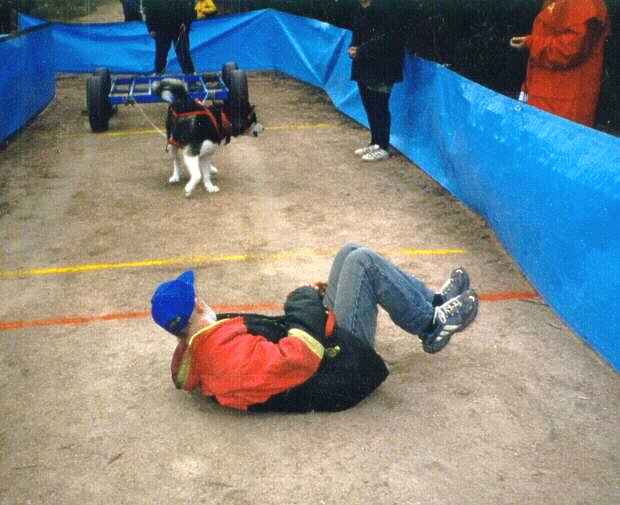 Right:
Some handlers will try anything to get their dog to pull!
Right:
Some handlers will try anything to get their dog to pull!
Weight-pulling is not a sport in which all dogs will excel, in fact many Malamutes seem to be of the opinion that, since they're tied to something, how could you possibly expect them to come to you! How often have those big impressive Mals that draw admiration from the crowd embarrassed their owners in the chute by completely ignoring their pleas to pull! There is no doubt that Malamutes are strong dogs that are capable of pulling great weights, but it all comes down to whether or not they want to pull. And if they don't, bad luck because there is absolutely nothing you can do about it!
Tuggy is extremely eager to pull and has achieved his Working Weight-Pull Dog Excellent title. He has also won his weight-class in many AMCV Annual Weight-Pull Competitions and was awarded Top Weight-Pull Dog of the year in 2002. Dugan is not quite as enthusiastic, in fact he is renowned for waiting until the last few seconds before he decides that maybe he will pull after all!
It is important that your dog doesn't have any bad experiences at a weight-pull, either in or out of the chute, so make sure that it is fun for your dog, give your dog plenty of encouragement and praise no matter how well or poorly he performed, and never chastise a dog for not pulling.
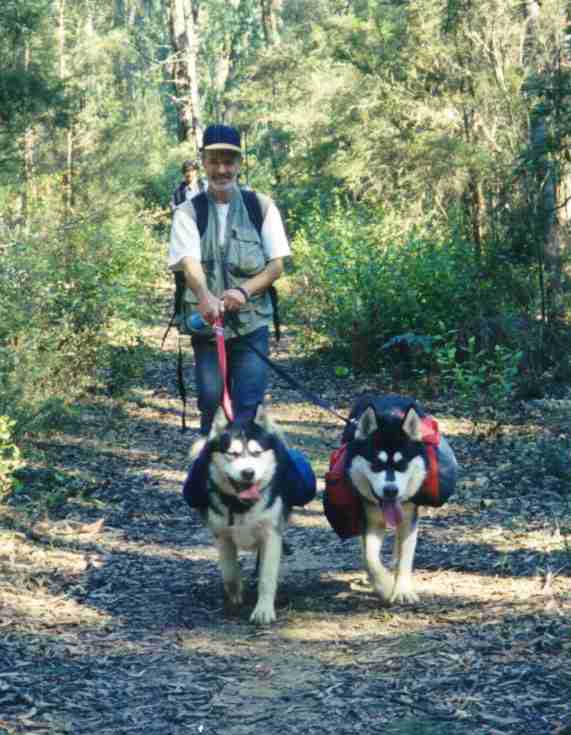 Backpacking
is an extremely enjoyable activity that we love to do with our Mals, whether we
are seeking to title a dog or just taking them along for an outing. As with any
strenuous working activity, your Malamute needs to be reasonably fit, physically
mature and passed for Hip dysplasia before you should consider doing any serious
backpacking or seeking a Working Pack Dog title.
Backpacking
is an extremely enjoyable activity that we love to do with our Mals, whether we
are seeking to title a dog or just taking them along for an outing. As with any
strenuous working activity, your Malamute needs to be reasonably fit, physically
mature and passed for Hip dysplasia before you should consider doing any serious
backpacking or seeking a Working Pack Dog title.
Kiska, Dugan, Laska and Tuggy have obtained their Working Pack Dog titles, and Tuggy has also completed the first leg of his Working Pack Dog Excellent title.
For information about equipment for backpacking with your dog go to our Windchill Dog Gear website.
 Sledding
with a Malamute is an ideal way to give your dog plenty of the exercise he needs
participating an activity that the breed was born to do. Most Malamutes
take readily to pulling in harness if fit and healthy, with the instinct to pull
coming naturally.
Sledding
with a Malamute is an ideal way to give your dog plenty of the exercise he needs
participating an activity that the breed was born to do. Most Malamutes
take readily to pulling in harness if fit and healthy, with the instinct to pull
coming naturally.
|
Ralph
& Sandy Koch |
|
Ph: 03 9714 8540 |
Site produced by Windchill Kennels. Please do not reproduce without permission of the author. Updated July 2003
|
The Alaskan Malamute Club, Victoria is
|
|
|
| Top of Page | Back to Homepage | Contact Information |
Alaskan
Malamute Club, Victoria Inc.
Postal address: PO Box 41, Hurstbridge VIC 3099
General Enquiries Phone: (03) 9714 8540
Email:
amcv@bigpond.com
Site produced by Windchill Kennels. Please do not reproduce without permission of the author. Updated July 2003 |